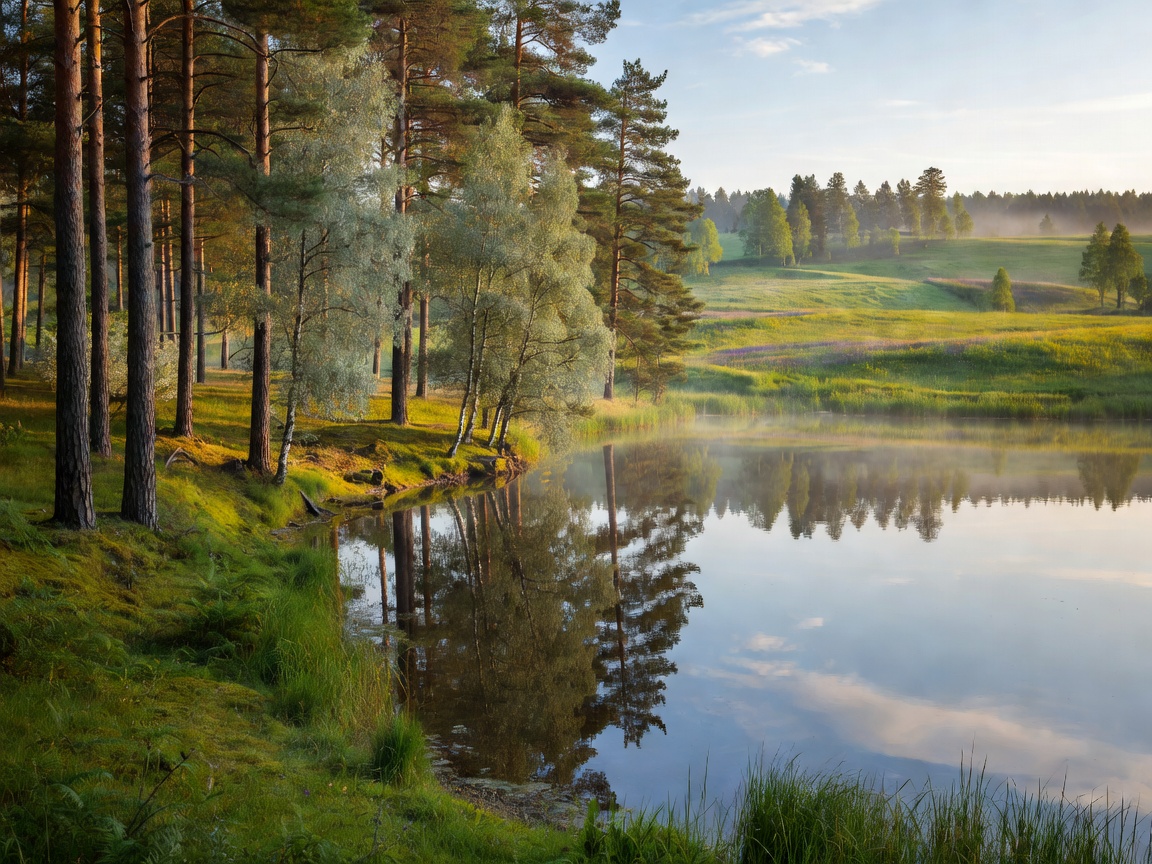
Lithuanian manor properties are associated with varied settings, from countryside near regional towns to woodland, river and lake landscapes. A rural address may provide quiet surroundings, but it can also mean fewer services within walking distance. Select a location by mapping the full trip: arrival point, final leg, meals, planned activities and return transport.
Read the regional setting
For a first shortlist, divide the map into broad areas rather than assuming one landscape represents the country. Aukštaitija in the northeast is known for a landscape of lakes and forests. Dzūkija in the southeast is strongly associated with woodland and sandy terrain. Samogitia, or Žemaitija, in the northwest has its own upland and lake districts. The Nemunas River and its valley shape parts of the south and west, while the Baltic coast offers a different, more maritime setting. These are regional landscape descriptions, not guarantees about a particular property’s view.
Manor sites may sit near a town, in a village, or beyond either. Nearby towns can make groceries, dining alternatives and local services easier to reach. More isolated estates may offer a stronger sense of separation, but require more planning for meals, taxis and activities. Check the actual address and surrounding map rather than judging by regional labels alone.
Forests, lakes and rivers
A forest setting can support walks and quiet outdoor time. Ask whether paths are on the property or public routes, what surfaces they use and whether access is seasonal. A lake or river nearby can shape the scenery and activities, but does not establish that swimming, boating or fishing is permitted. Verify access rights, safety arrangements and any facilities with the property or relevant local source.
Waterfront descriptions need careful reading. “Near a lake” may mean a short drive rather than direct grounds access. A river landscape can be picturesque but may have steep banks or limited public entry. When outdoor access matters, request a clear description of where guests may go and whether the route suits your group.
Access and nearby services
Road travel often gives the most flexibility for rural stays, especially when the final approach includes local roads. Do not rely on a map estimate alone. Confirm the address, parking arrangements, arrival instructions and whether the entrance is easy to identify after dark. Current roadworks and conditions change, so check a current navigation source close to departure.
Public transport planning depends on the property’s position relative to rail or bus services and the final distance from the stop. Timetables, service frequency and seasonal operations can change. Confirm current schedules with the transport operator, then ask the property whether a transfer or taxi can be arranged. Do not assume a rural transfer service is available.
Nearby services matter beyond transport. Check where you can obtain food, fuel, medication or cash if needed. Ask whether dining is offered on site, whether reservations are necessary, and how late check-in works. Groups attending an event should consider guest transfers, parking capacity, arrival windows and a safe departure plan.
How location changes the experience
Privacy: countryside and forest sites may have fewer nearby buildings, but privacy depends on grounds layout and event use. Scenery: views change by season and room orientation. Activities: a lake, town or trail can add options, but proximity alone does not confirm access. Dining and shopping: a central location can reduce planning; a remote site may make on-site arrangements more important. Events: rural settings can suit a private gathering, while travel logistics become a larger part of the plan.
Location can also affect who should travel together. If a group includes guests who do not drive, mobility-limited visitors or families with small children, establish transfer options before selecting the venue. Ask about surface conditions, steps at the entrance, distance between rooms and event spaces, and availability of accessible transport.
Good for
Lake and forest areas suit visitors prioritizing landscape, outdoor time and a quieter base. Town-adjacent locations can suit guests who value services and simpler onward travel. A river or coastal setting may fit an itinerary built around regional scenery. These are planning tendencies, not promises about individual sites.
What to know
Request the precise address and arrival instructions. Confirm transport options, parking, nearby food and the actual distance to outdoor areas. Check current schedules and road information independently. For seasonal visits, ask about grounds access, daylight and any changes to dining or on-site facilities. Build a fallback plan if a transfer, meal or outdoor activity is essential.